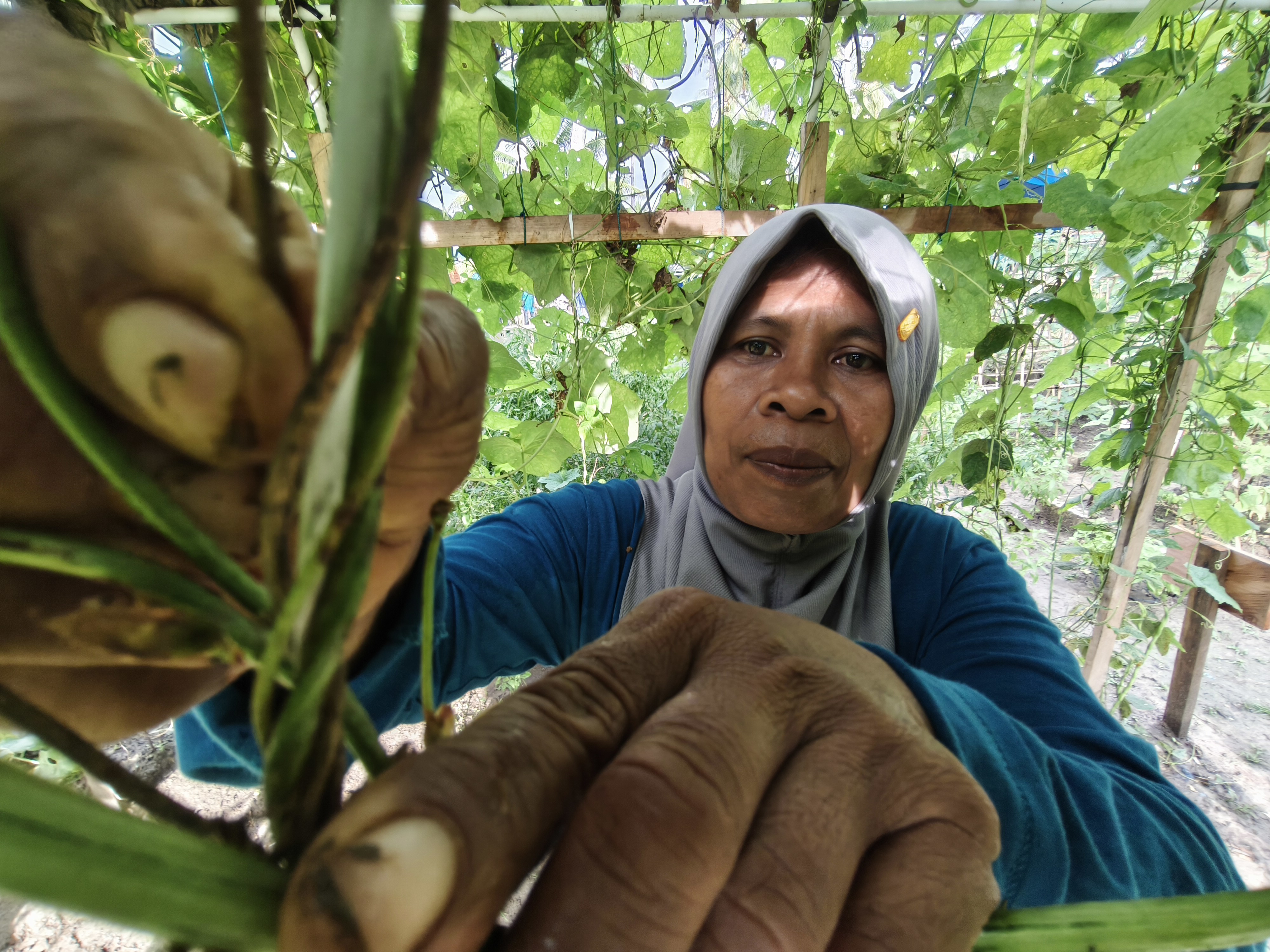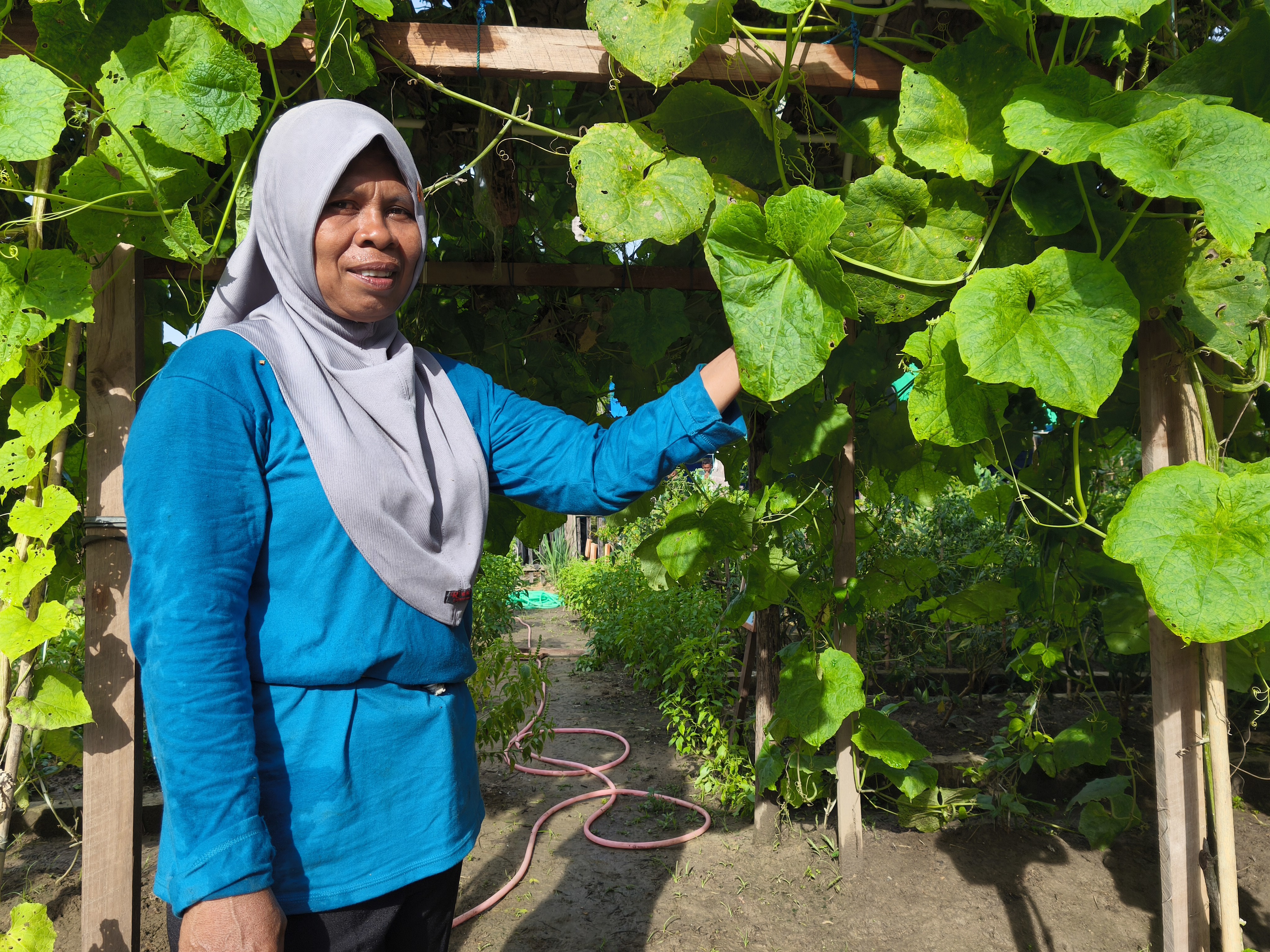
Wa Ode Sitti Murni grew up in a life constantly tested. From a young age, she learned to survive, and in 1989, she moved to Ternate with nothing but her strength and determination. In the cafeteria of a plywood factory, she scraped together a living until she met her soulmate, La Ode Arwan. The household they had slowly built together collapsed when the factory went bankrupt in 2007. Their economic hopes were dashed, and then came layer upon layer of grief. Their eldest child, Sartia, fell ill and eventually died in 2012 after a long treatment that drained the family’s savings and jewelry. This loss caused Murni to fall back into despair, just when life demanded that she remain standing.
Returning to her hometown of Muna in 2008 marked the beginning of a new chapter that was no less difficult. With her husband having to migrate for work and three children to care for, Murni chose to farm on land borrowed from her family. She planted coconut trees but gave up after they were repeatedly destroyed by pigs. She switched to cashews, corn, vegetables, and fruit, and managed to reap some rewards, even though she had to move from one plot of land to another because the soil quickly lost its fertility. She moved from one field to another for years, amid the bitter news that her husband had been detained in Malaysia for working illegally. Loneliness, exhaustion, and anxiety became her silent daily companions.
In 2019, the family was reunited, just before the pandemic hit. Corn farming was no longer promising due to pests and damaged soil. They tried raising chickens and cows, but this brought new problems. The livestock often damaged residents’ crops, and their growth was suboptimal due to limited knowledge and poor feed quality.
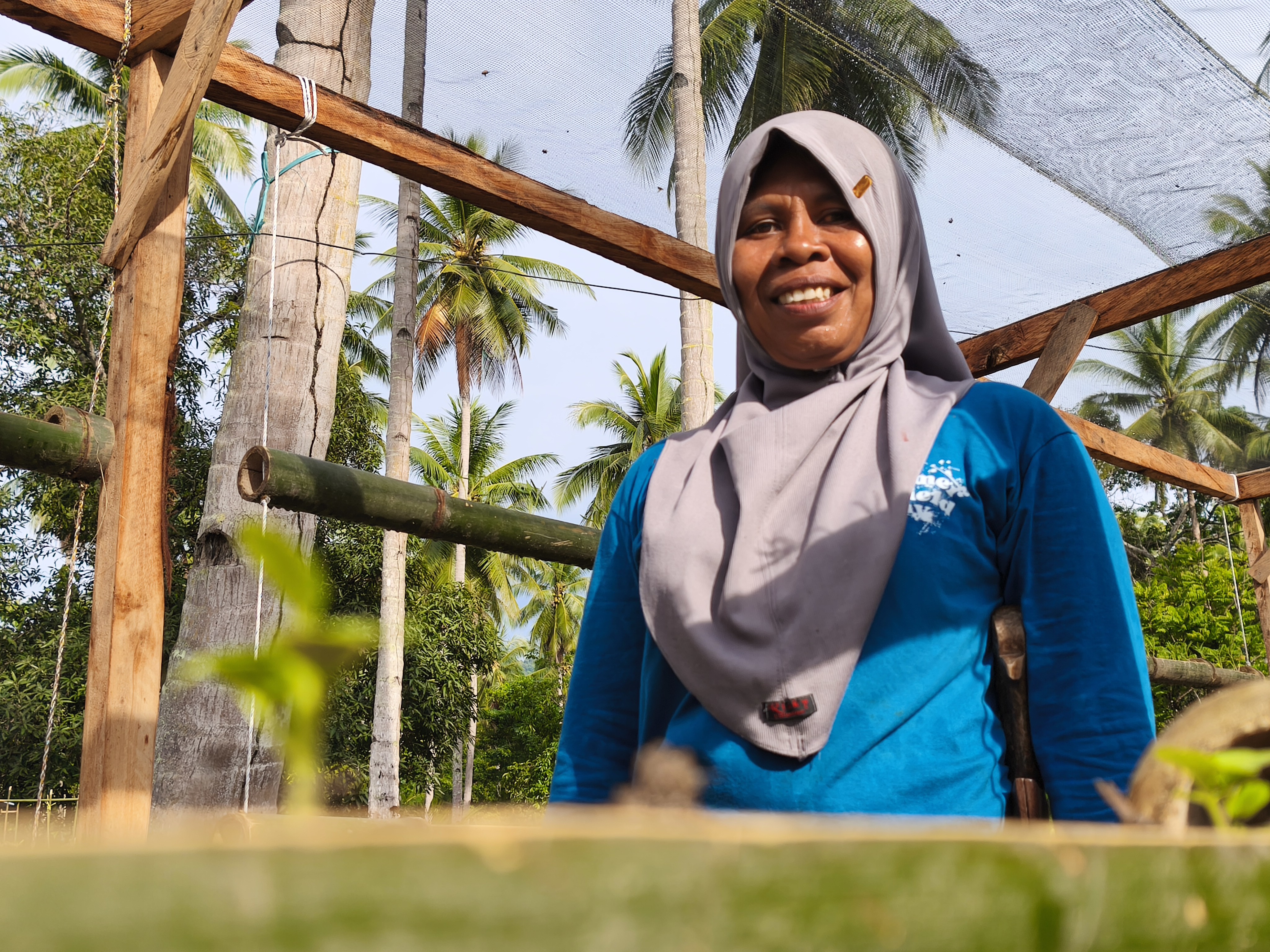
Expectations from the Coastal Field School
In early 2024, the Blue Forest Foundation arrived in Baluara Village with a different learning offer. The Coastal Field School (SLP) for Integrated Agriculture was introduced as a down-to-earth non-formal learning method. Residents were not only invited to sit and listen to presentations, but also to go directly to the field, observe, discuss, and then solve problems based on their daily experiences. From village mapping and needs analysis to creating seasonal calendars, residents began to recognize their own ecosystems and develop action plans.
For Wa Ode Sitti Murni, this process was an eye-opener. Issues that she had previously faced alone could now be discussed together. “It turns out I don’t have to plant far away,” she said with a beaming face.
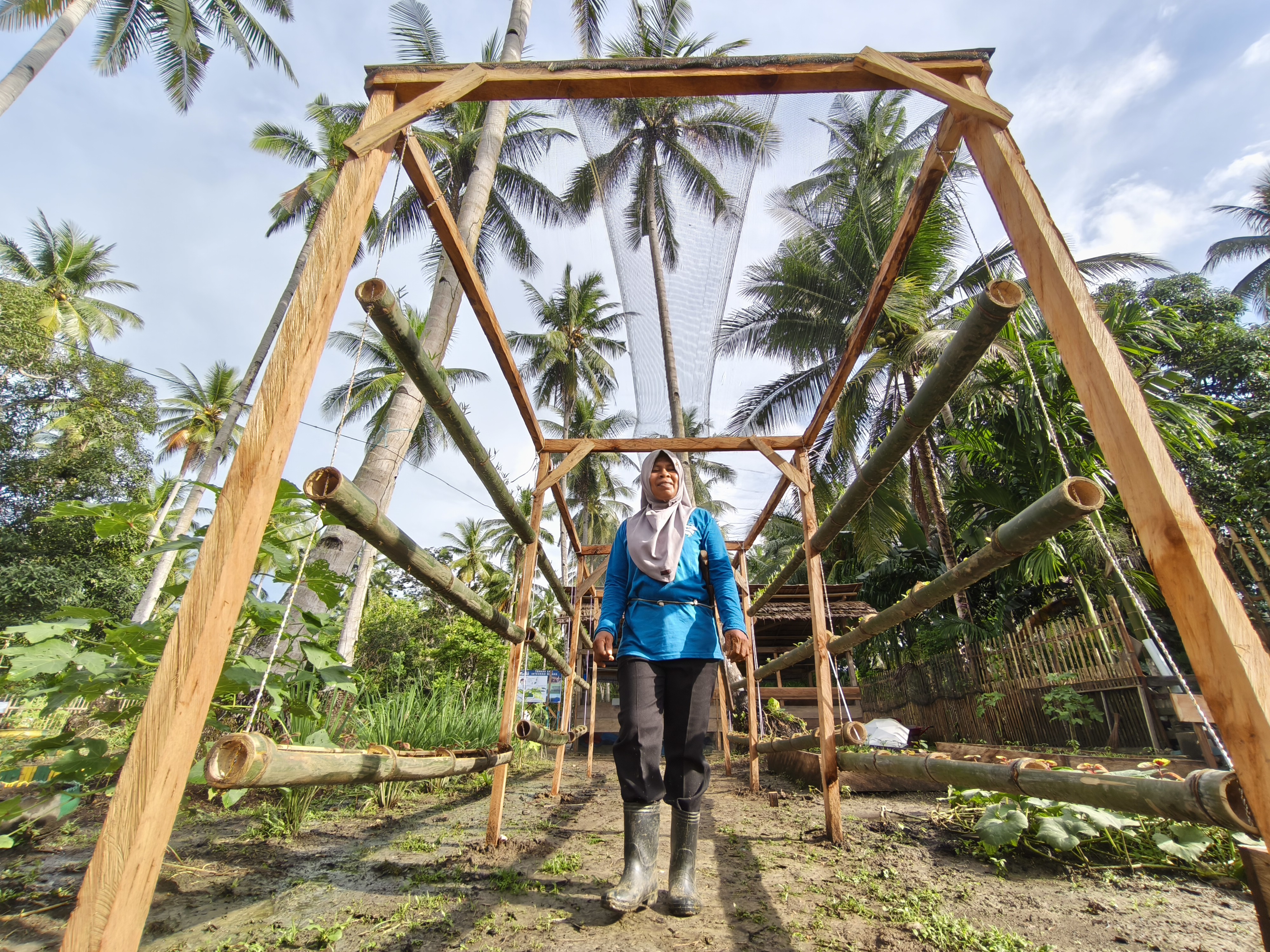
Until now, the people of Baluara have relied on shifting cultivation. Forests are cleared, bushes are cleared, trees are cut down, even burned, and then planted with a single crop. When the soil is no longer considered fertile, the land is abandoned, and residents clear new areas. This pattern is exhausting and risks encouraging deforestation. “It’s tiring to keep clearing fields. The location is far away, and it’s difficult to protect the crops from pigs and cows,” said Murni. Through the Integrated Agriculture SLP, she learned that home gardens and abandoned land can be turned into food production areas. Together with 19 group members, she cleared a 40 x 60 meter plot of land and built a demonstration plot to test and evaluate integrated agricultural practices.
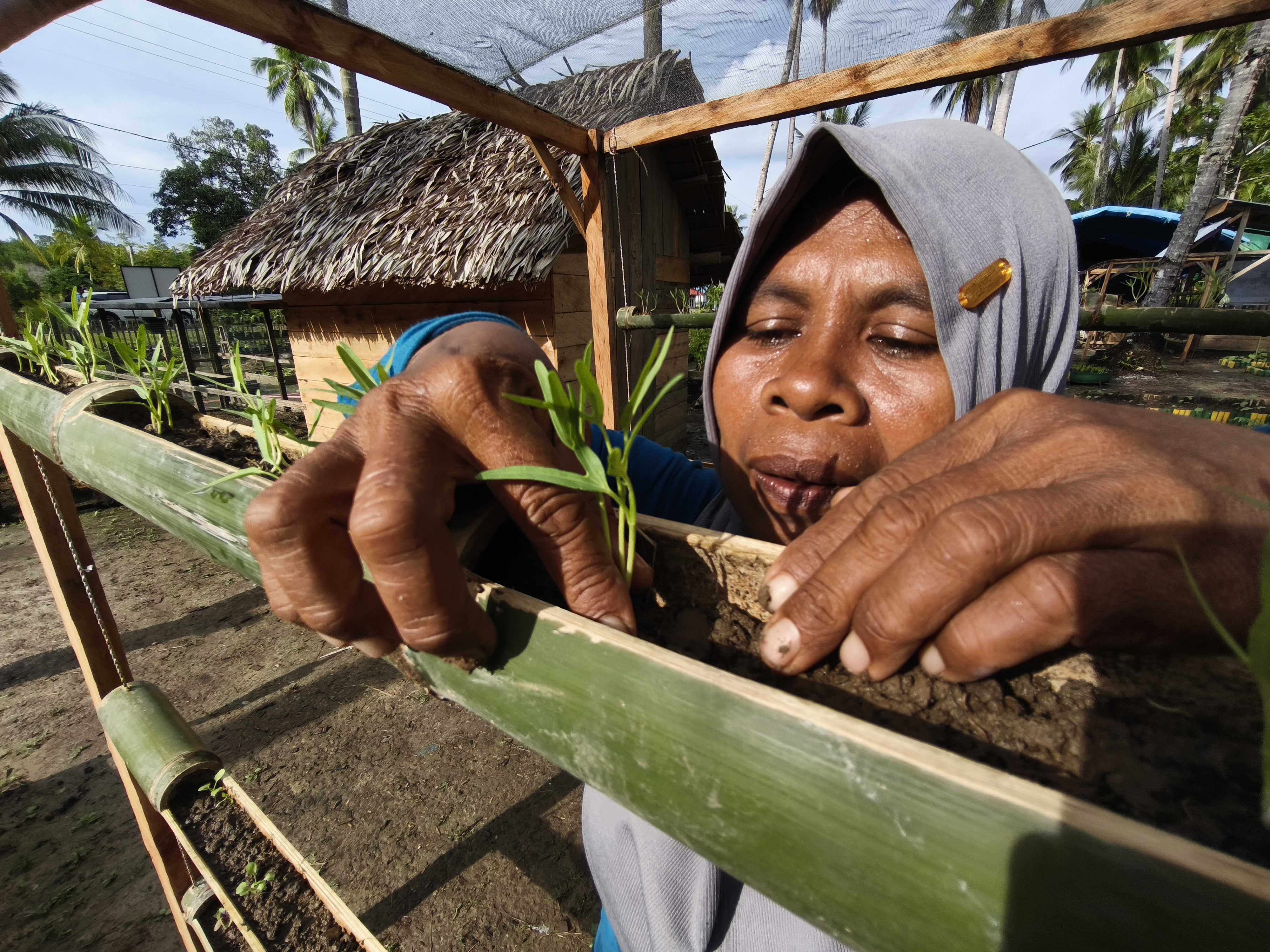
The integration does not stop at plants. Chicken and cow pens were also built on the demonstration plot. Vegetable waste and household waste are used as chicken feed, while the manure is naturally mixed into compost. The cows are kept in pens and fed elephant grass and gamal leaves. “I am no longer worried. The chickens and cows do not damage other people’s crops,” said Murni with relief.
From the abundant cow dung, participants built a simple biogas system. The tube was installed right behind the barn. More than a week later, blue flames lit up the stove. “It’s like a dream,” said Murni, recalling her comparative study experience that has now become a reality in her own backyard.
Fish ponds were constructed using simple tarpaulins. Tilapia were raised on azolla, a prolific aquatic plant packed with nutrients. For the coastal residents of Baluara, lifelong seafarers, freshwater fish farming was an unfamiliar challenge that ignited their curiosity. They learned to identify fish life stages, manage feeding routines, and monitor pond water quality. The learning process was sometimes difficult, but it was approached with perseverance and solidarity. Gradually, the tarpaulin ponds demonstrated that food sources need not come from the sea or distant agriculture, but could be generated in one’s own backyard.
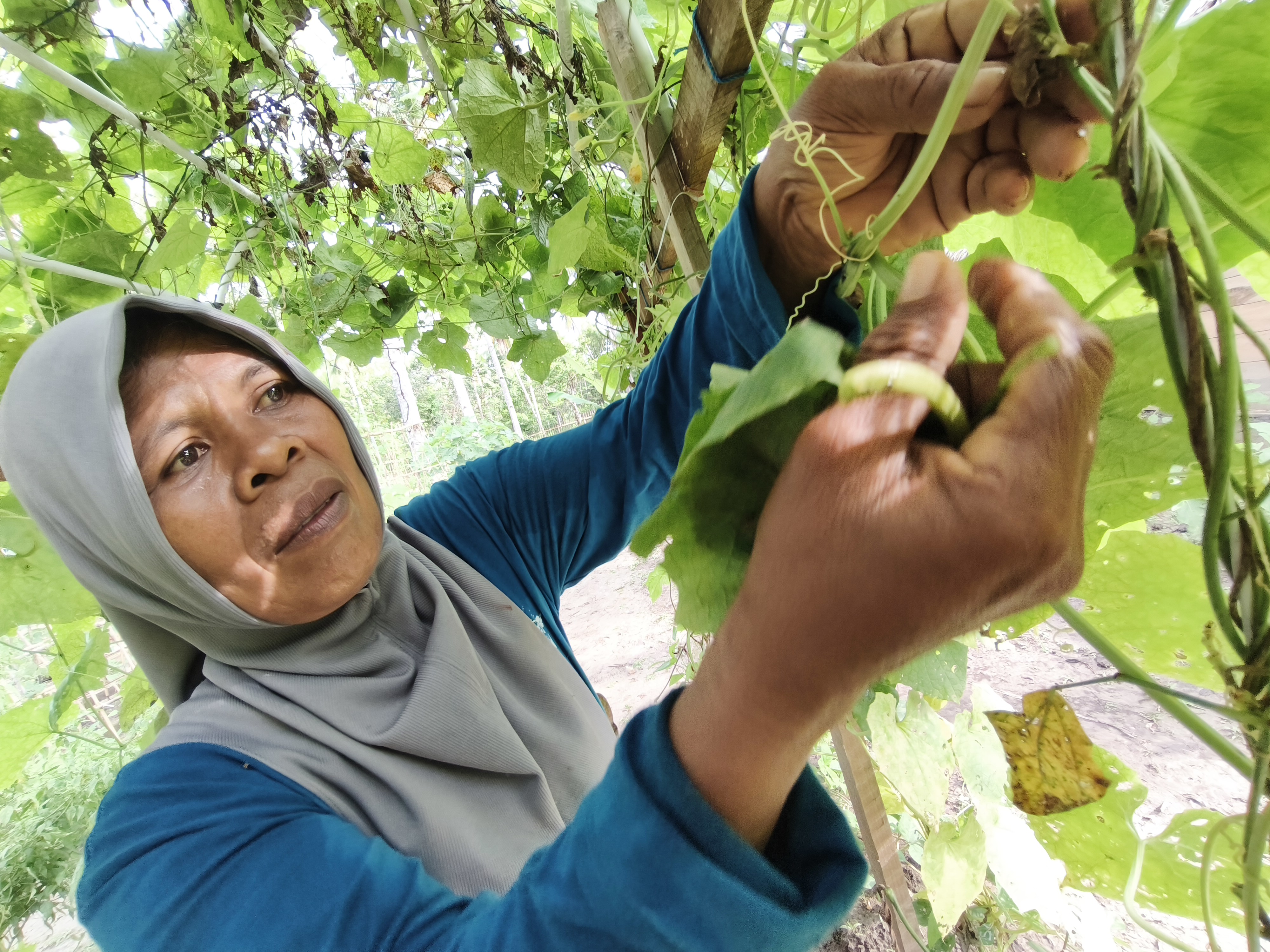
For Wa Ode Sitti Murni, Integrated Farming is not just a series of farming, animal husbandry, or fish farming activities. This program has changed her perspective on life and space. She no longer has to move around to clear fields, travel long distances, or constantly worry about losing her crops to pests and livestock. Everything is managed within a single interconnected system in her backyard: vegetables, livestock, fish, fertilizer, and even energy. Through this collaborative learning process, a new conviction has emerged that change can begin with small, local actions. From her simple backyard in Baluara Village, the hope for a more self-reliant and sustainable life is slowly taking root.