
Batu Ampar Village is one of the villages located in Kubu Raya Regency, West Kalimantan Province, known for its mangrove forest potential of 110,000.63 hectares (National Mangrove Map, 2023). This mangrove ecosystem area is not only essential for environmental sustainability, but it also boasts a very high biodiversity. This forest plays a crucial role in sustaining the lives of local communities, particularly in the fisheries sector, which is one of the primary sources of livelihood. The waters around Batu Ampar Village are home to a variety of fish species, which not only support fishing activities but also provide significant ecological benefits.
In addition to being a habitat for fish, the waters in Batu Ampar Village are also the habitat of a rare and protected animal, the Irrawaddy Dolphin (Orcaella brevirostris). Pesut is one of the endangered species in Indonesia. Around 10 to 15 years ago, the presence of dolphins in this area was still quite common. The animal was often found swimming in the waters near local settlements. However, now, the presence of dolphins in this region is becoming increasingly rare.
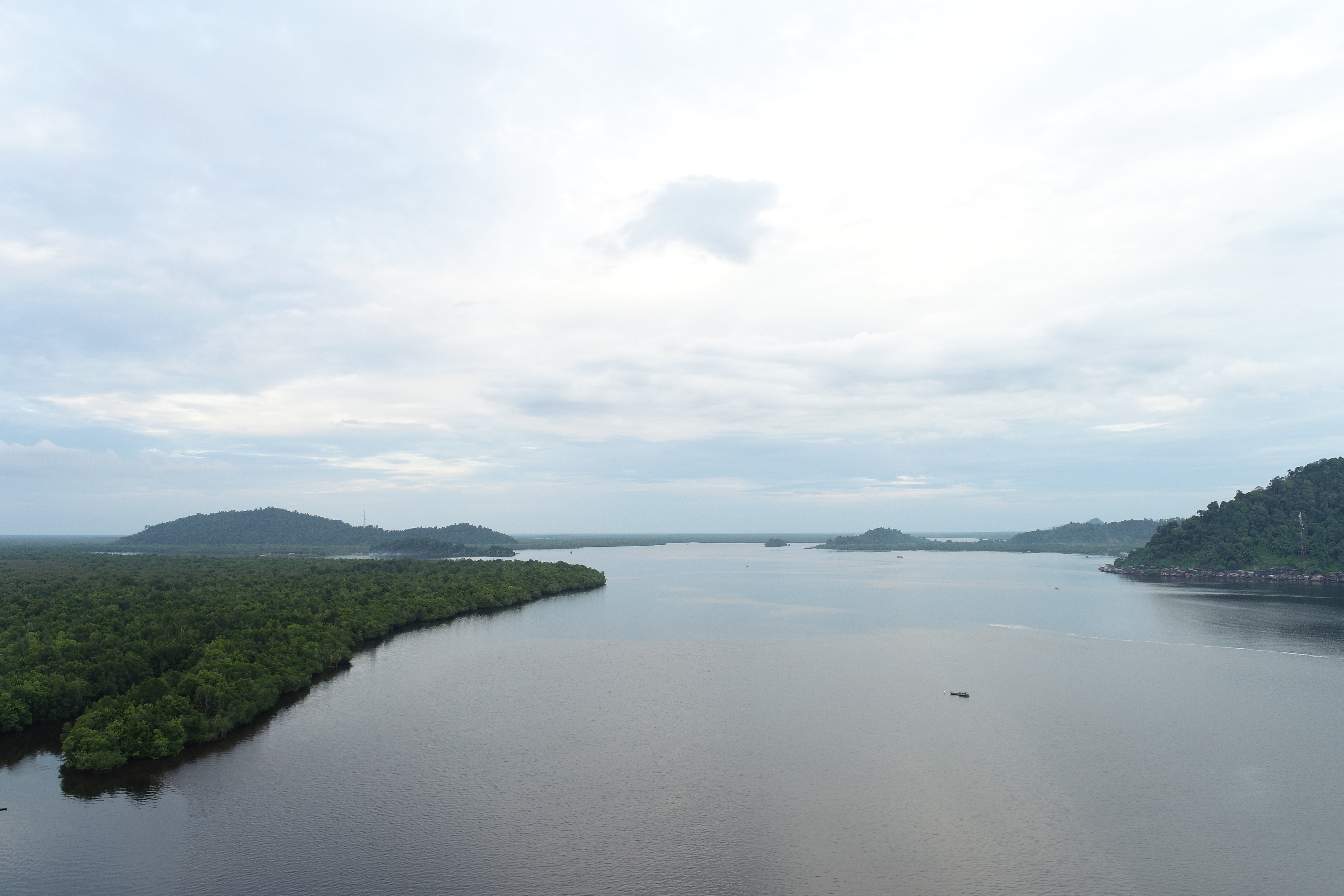 Community settlement and waters of Batu Ampar Village – Achmad/Blue Forests
Although the past is rarely seen today, it can still be found in the mangrove forest area of Batu Ampar Village. This suggests that the dolphin’s range corridor still covers the area around the mangrove forest, although the population has decreased compared to a few decades ago. The discovery of dolphins in this area is similar to the presence of Mahakam dolphins in East Kalimantan. This is due to the presence of a waterway from the Mahakam River that connects to the waters of the Batu Ampar Sub-district, creating an ecological relationship that allows dolphins to migrate and search for suitable habitats.
The extensive mangrove forests in Batu Ampar Village not only serve as a buffer ecosystem but are also an essential habitat for many key species, including proboscis monkeys (Nasalis larvatus) and porpoises (Orcaella brevirostris). These mangrove forests provide a favorable environment for both species in terms of protection and availability of natural resources such as food.
Pesut is a marine mammal that has a wide distribution in the tropical and subtropical Indo-Pacific region. Its habitat spans various countries, including Bangladesh, Myanmar (also known as Burma), Thailand, Cambodia (also known as Kampuchea), Laos, Vietnam, Malaysia, Singapore, Brunei Darussalam, and Indonesia. This geographical distribution demonstrates the adaptability of dolphins to various water conditions, including those found in large rivers and estuary areas, such as mangrove forests. However, the existence of this species is highly dependent on the sustainability of the ecosystem and the quality of the aquatic environment, so the mangrove forest of Batu Ampar Village has a vital role in supporting the preservation of this rare animal.
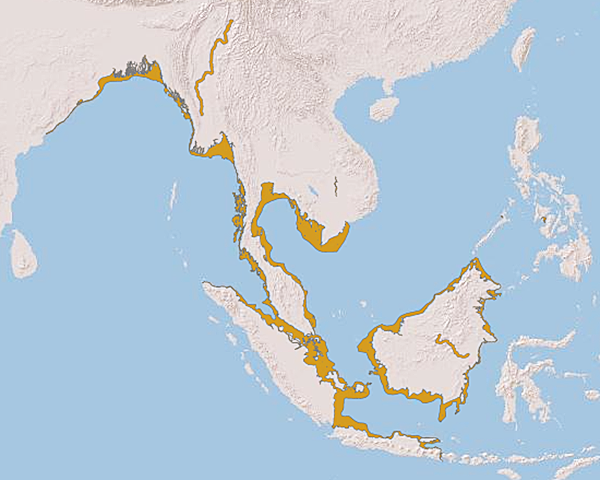 Pesut distribution – IUCN, 2024.
The Irrawaddy Dolphin (Orcaella brevirostris) is a type of aquatic mammal that lives in groups and has distinctive physical characteristics. Their body length ranges from 1.3 meters to 2.7 meters, making them medium-sized compared to other marine mammals. As carnivores, dolphins eat a variety of foods, such as fish eggs, squid, mollusks, and other marine organisms, which are their source of nutrition in aquatic habitats.
They have a uniform body color, which is gray to dark blue, with a paler underside. Unlike most other dolphins, it lacks a snout, and a high, rounded forehead characterizes its head shape. Its dorsal fin is relatively small and located in the center of the back, with no conspicuous body pattern. This unique morphology sets it apart from other dolphins, making it easily recognizable to researchers and the public concerned with the conservation of aquatic animals.
In terms of conservation, the status of the result is very worrying. Based on the Red List released by the International Union for Conservation of Nature and Natural Resources (IUCN), the pest is categorized as Endangered (EN), which means that its population continues to decline and faces the risk of extinction if no significant protection efforts are made. In addition, the Convention on International Trade in Endangered Species of Wild Fauna and Flora (CITES) lists the best in Appendix I, which emphasizes that this species is prohibited from being traded in any form.
At the national level, the protection of dolphins has also been regulated through the Minister of Environment and Forestry Regulation No. 106/2018, which lists protected plant and wildlife species in Indonesia. This regulation emphasizes that dolphins (Orcaella brevirostris) are categorized as legally protected animals, so all forms of exploitation of these animals are prohibited.
Given their highly vulnerable status, efforts to protect them must be prioritized, primarily through the preservation of their natural habitat. Mangrove forests, such as those in Batu Ampar Village, play a vital role in supporting dolphins by providing a safe environment and adequate food sources. Serious conservation measures, such as ecosystem restoration, water pollution control, and raising public awareness, are essential to ensure the survival of this species in the wild and prevent its extinction.
 Pesut (Orcaella brevirostris) – Achmad/Blue Forests
The discovery by the Patrol and Monitoring Team was a significant and attention-grabbing moment in the series of conservation activities in the area. The discovery occurred on Wednesday, December 11, 2024, when a team of fishermen was conducting routine monitoring around a river location that has become a test area for mangrove crab natural savings (Temporary Closure/TC). The TC program aims to protect mangrove crab populations by temporarily closing access to crab fishing in the area. These patrols and monitoring activities are conducted every week to ensure that there are no violations, such as crab fishing activities in the location that is under the duration of the natural savings.
During the patrol, the team detected movement on the surface of the water which was later identified as pesut. A total of three dolphins were spotted in the waters about 200 meters away from the TC test site in the Cabang Jalil River. The presence of these rare mammals is an
important indicator that the waters in the area are still able to support the life of protected species such as dolphins. The discovery occurred during drizzly rainy weather, which according to local people, is a condition often associated with the appearance of dolphins. They believe that dolphins tend to appear after rain or when the rain is not too heavy. This community information adds a local dimension to traditional knowledge involving animals.
In addition, the Batu Ampar fishing Community has a unique belief regarding the appearance of dolphins. They believe that if a dolphin is spotted during the day, then the night will be a good time to catch shrimp using nets because the presence of dolphins is considered a sign of an ecosystem rich in aquatic biota. This demonstrates the close relationship between local communities and the surrounding ecosystem, where traditional beliefs often align with the ecological understanding of the aquatic environment’s condition.
The discovery of this pesut is not only a testament to the sustainability of conservation efforts in the area but also reinforces the importance of collaboration between local communities and conservation teams. By regularly conducting patrols and monitoring, both to maintain the sustainability of the TC program and to monitor the condition of the ecosystem, efforts to protect the pesut habitat in the mangrove forest area and its surroundings can continue to be improved.
 Pesut (Orcaella brevirostris) – Achmad/Blue Forests
Monitoring efforts in the mangrove forest area of Batu Ampar Village will be carried out continuously by the patrol and monitoring work team, especially in the mangrove crab natural savings trial area or TC, until the natural savings duration period is completed within three months. During this period, the team will not only focus on monitoring the TC location to prevent violations, such as unauthorized crab fishing activities but also conduct detailed data collection related to biodiversity in the area. This includes recording species of flora and fauna, observing distinctive natural features, and identifying indicators of environmental damage that could potentially threaten the mangrove ecosystem.
In addition to technical supervision, this monitoring activity was also used to socialize the TC pilot program to fishermen in Batu Ampar waters. This socialization aims to enhance Community understanding and support for community-based natural resource management methods, which involve collaboration between local communities and various stakeholders, including the government and conservation organizations. Through this approach, fishermen are invited to play an active role in maintaining the sustainability of mangrove ecosystems and mangrove crab populations.
The TC activity itself is an innovative measure introduced on November 25, 2024, by the Blue Forest Foundation in collaboration with the Blue Action Fund and Blue Ventures, to provide a respite for mangrove crabs to breed.. By imposing a temporary ban on fishing activities in the TC area, it is hoped that the crab population can increase naturally through the regeneration process. In implementation, all forms of in-river activities could interfere with the crab breeding process such as intensive fishing or crabbing.
This activity not only supports the conservation of mangrove crabs as an essential commodity for coastal communities but also becomes part of the overall mangrove ecosystem conservation efforts. By involving the Community as the leading actor in resource management, the TC program can create a sustainable management model, strengthen the relationship between humans and the environment, and ensure the preservation of biodiversity in the mangrove area of Batu Ampar Village for future generations.
 Patrol activities and monitoring of TC locations – Achmad/Blue Forests