
Medan Mas Village, located in Kubu Raya Regency, West Kalimantan, is facing serious threats to its mangrove ecosystem. The mangrove area in this rural Batu Ampar sub-district is threatened by illegal logging practices and conventional pond development, which has the potential to damage the environment. To address this threat, the village government and local communities have routinely patrolled and monitored the mangrove area. This effort aims not only to preserve the mangrove forest but also to protect the critical Bentang/bekantan (Nasalis larvatus) animals that depend on the ecosystem.
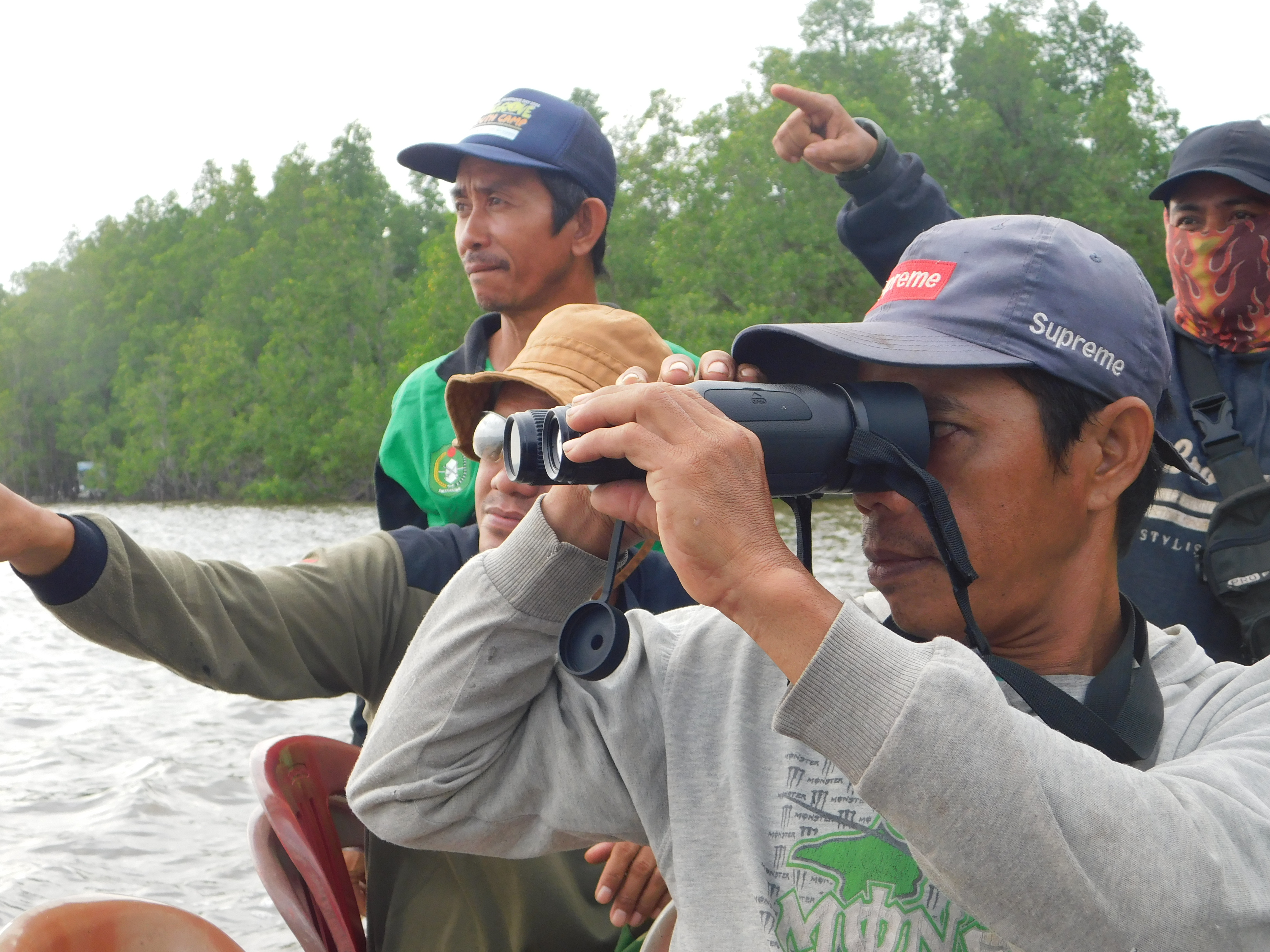 Patrol and Monitoring – Noviansyah Putra/Blue Forests
Recently, more than eight proboscis monkeys were spotted in the mangrove area of Medan Mas Village, which covers about 182 hectares. In the last few years, most of this mangrove area has been cleared for shrimp farming. Local people believe that since the change in function of this mangrove area, proboscis monkeys have become rare in their village. This is likely because the land use change has reduced the proboscis monkey’s original habitat, so they appear more often in areas adjacent to settlements.
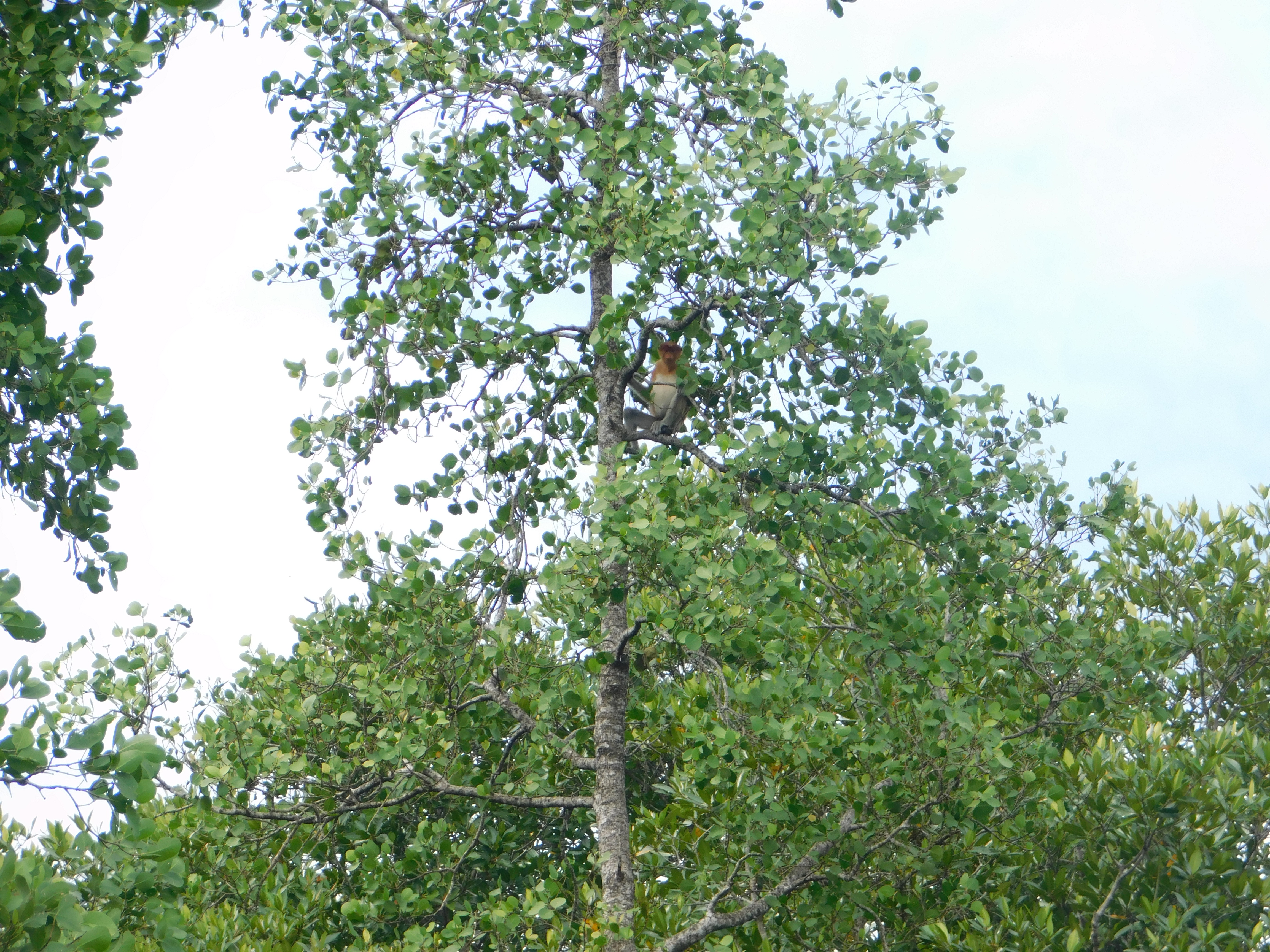 Bentang/Bekantan (Nasalis Larvatus) – Achmad Juwardi/Blue Forests
Based on research, proboscis monkeys are one of the key species that play a crucial role in maintaining the quality of mangrove ecosystems in the region, particularly in Kalimantan. This mammal is protected by the Minister of Environment and Forestry Regulation number 106 of 2018 and is listed as an endangered species in the IUCN Redlist. In Indonesia, the proboscis monkey population continues to decline due to land conversion into conventional ponds and illegal logging practices. The loss of the proboscis monkey’s natural habitat has a significant impact on the sustainability of mangrove ecosystems, considering that this species has a role in maintaining the balance of these ecosystems.
Economically, the people of Medan Mas Village rely on coconut commodities as their primary source of livelihood. Coconuts are not only the leading commodity but also the mainstay for the majority of the population in fulfilling their daily needs and sustaining the village economy. In addition, some residents of Medan Mas Village depend on ponds for their livelihoods, particularly shrimp farming, which is one of the key fisheries sectors in the area.
On the other hand, the community realizes the importance of the 182 hectares of mangroves in their village. These mangroves play a strategic role as a green belt, serving to protect the coastline from the threat of erosion. In addition, mangroves also serve as a natural filtration system, capable of maintaining water quality and supporting environmental ecosystems, thereby promoting the sustainability of community life both ecologically and economically. This awareness encourages people to preserve and protect mangrove areas as an integral part of environmental conservation efforts and the sustainability of their lives.
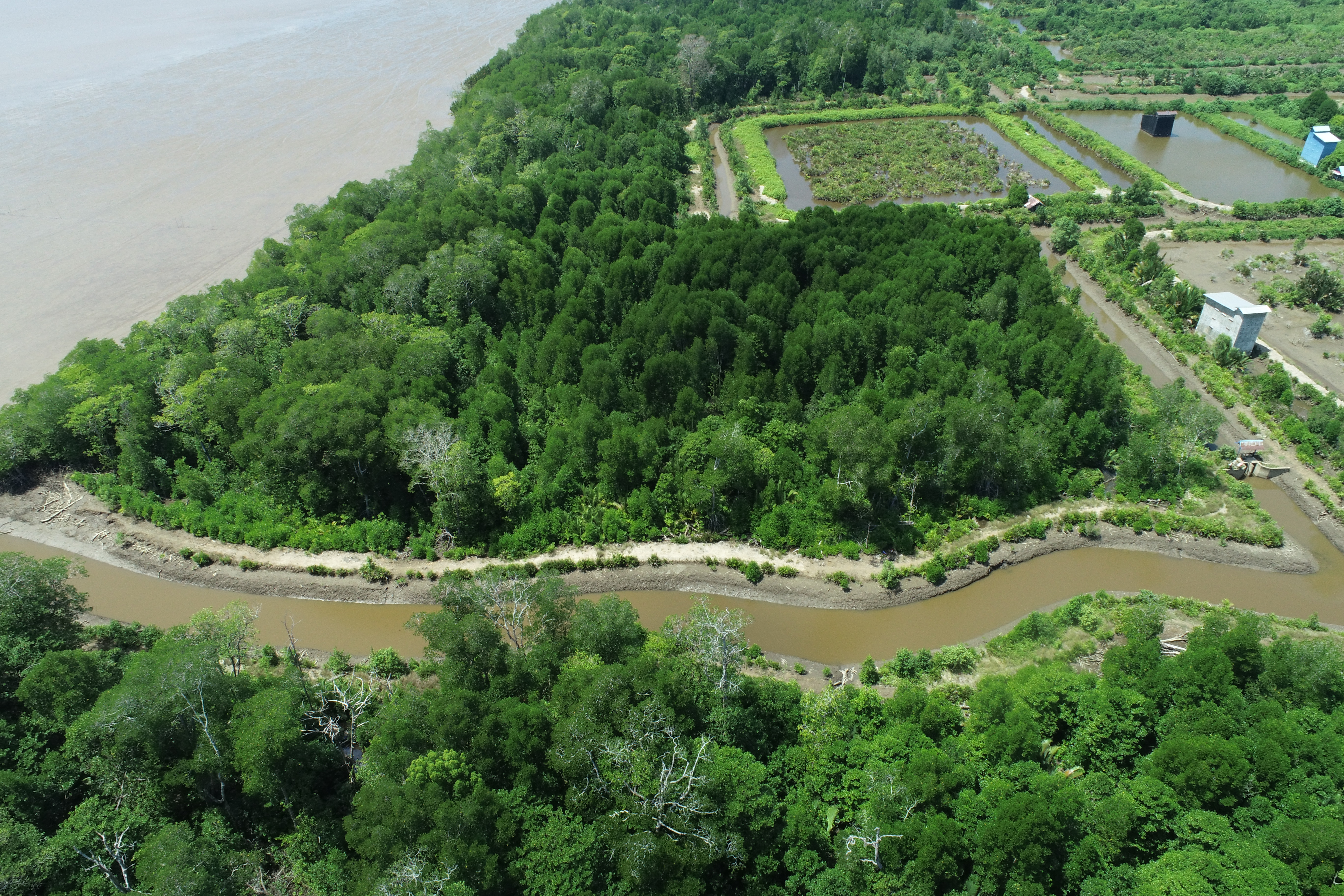 Medan Mas mangrove potrait – Noviansyah Putra/Blue Forests
Dharma Wira, the Village Head of Medan Mas, and Eka Rahadi, the Chairman of the Medan Mas Village Council (BPD), are actively working to conserve the mangrove ecosystem in their area. As part of this effort, they drafted and passed a Village Regulation (Perdes) that explicitly regulates the “Management and Protection of Mangroves. This regulation provides a legal foundation to support sustainable mangrove conservation. In addition, they formed a Patrol and Monitoring team tasked with conducting regular surveillance of the mangrove forest’s condition, as well as preventing activities that could damage the area. As a tangible manifestation of the village government’s commitment, a special allocation was also made to support the mangrove protection program.
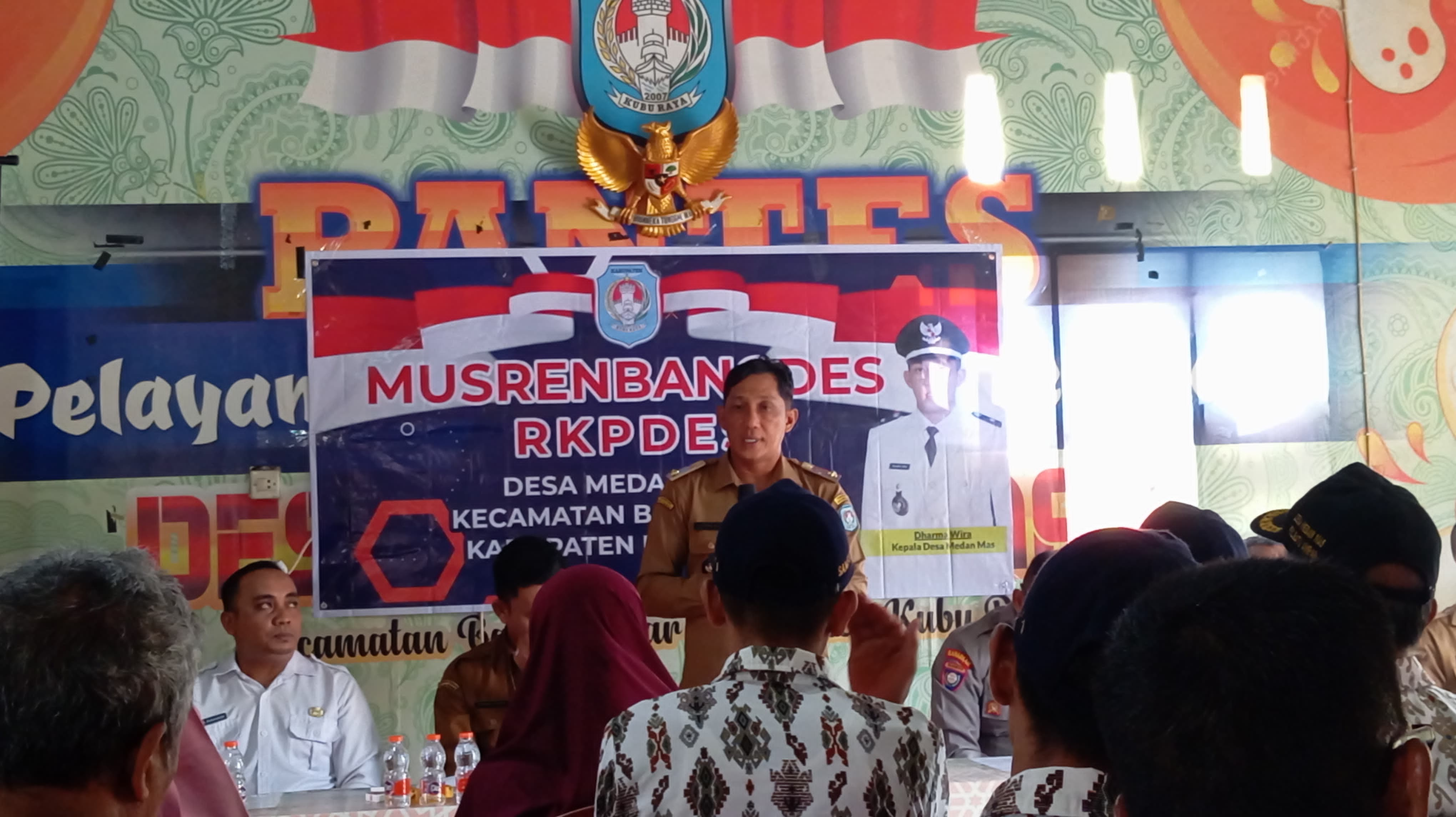 Socialization of village regulations of mangrove protection and management – Achmad Juwardi/Blue Forests
Not only does the village focus on environmental preservation, but it also develops community-based ecotourism potential through the Tourism Awareness Group (Pokdarwis). These attractions include the utilization of non-timber forest products (NTFPs), the processing of fishery products, the conversion of waste into economically valuable goods, and handicrafts produced by the local community. One of the main attractions of ecotourism in Medan Mas Village is the presence of proboscis monkeys, which have become a unique icon of the area. Visitors can also enjoy a trip down the river around the mangrove forest, making the tourism experience richer and more memorable. This effort not only has a positive impact on the environment but also improves the economic welfare of the local community.
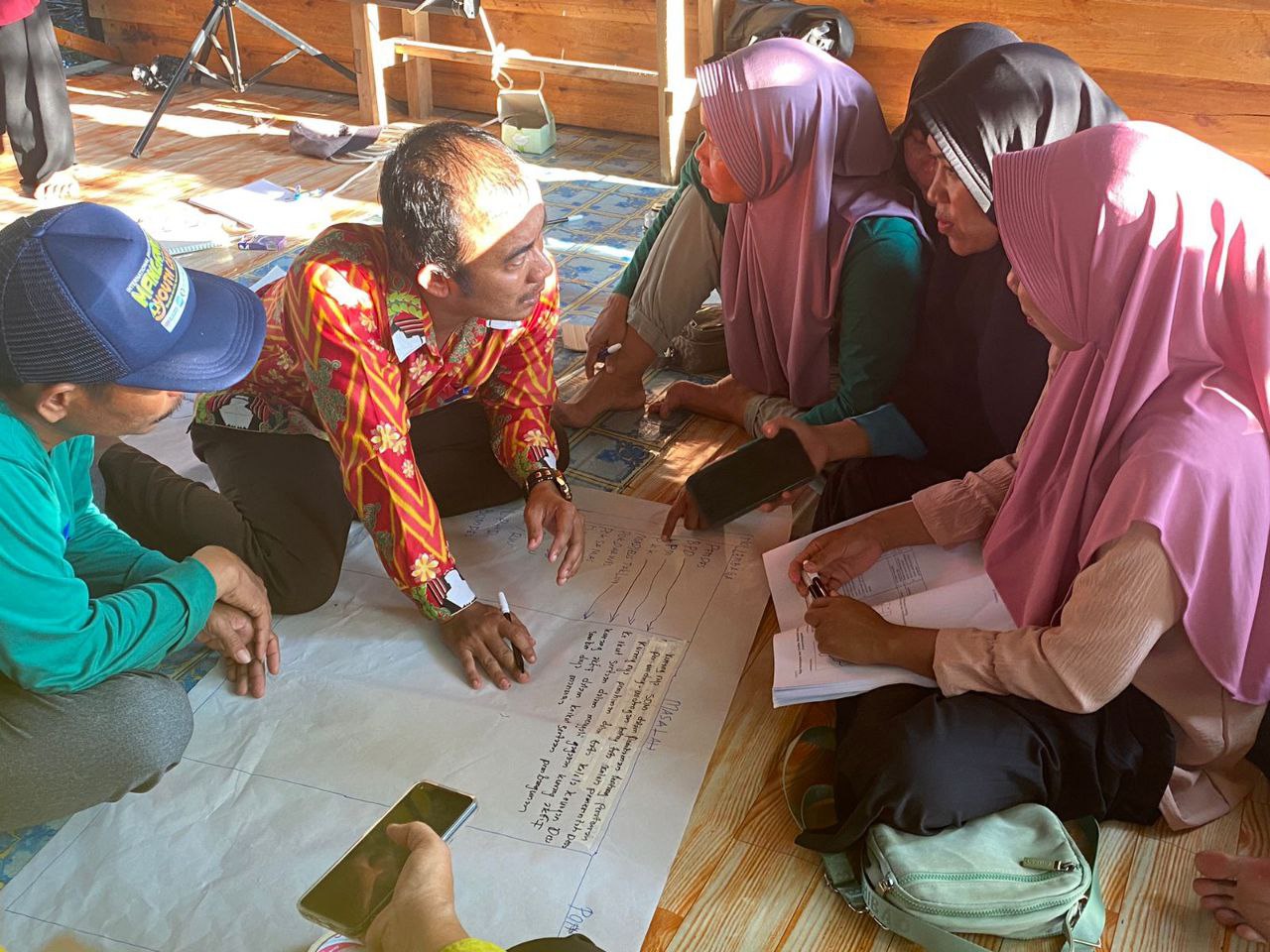
Ashri Afif, Chairman of the Medan Mas Village Pokdarwis, stated that one of the key steps in protecting the mangrove ecosystem is to develop various tourism attractions that blend nature and local culture. These attractions are designed to offer exciting new experiences for tourists while fostering an appreciation for the environment.
For example, the existence of 182 hectares of unspoiled mangrove forest area, coupled with the proboscis monkey population, which is a distinctive and unique species, is a major attraction that can be optimized. In addition, various mangrove utilization activities carried out by community groups also add value, strengthening this tourism potential.
Ashri emphasized that the natural and cultural wealth of Medan Mas Village is more than sufficient to serve as the main capital for developing strategic tourism. With targeted management, this potential not only supports mangrove conservation efforts but also provides significant economic and social benefits for the local community. This strategy aims to create a balance between environmental sustainability and improved community welfare.
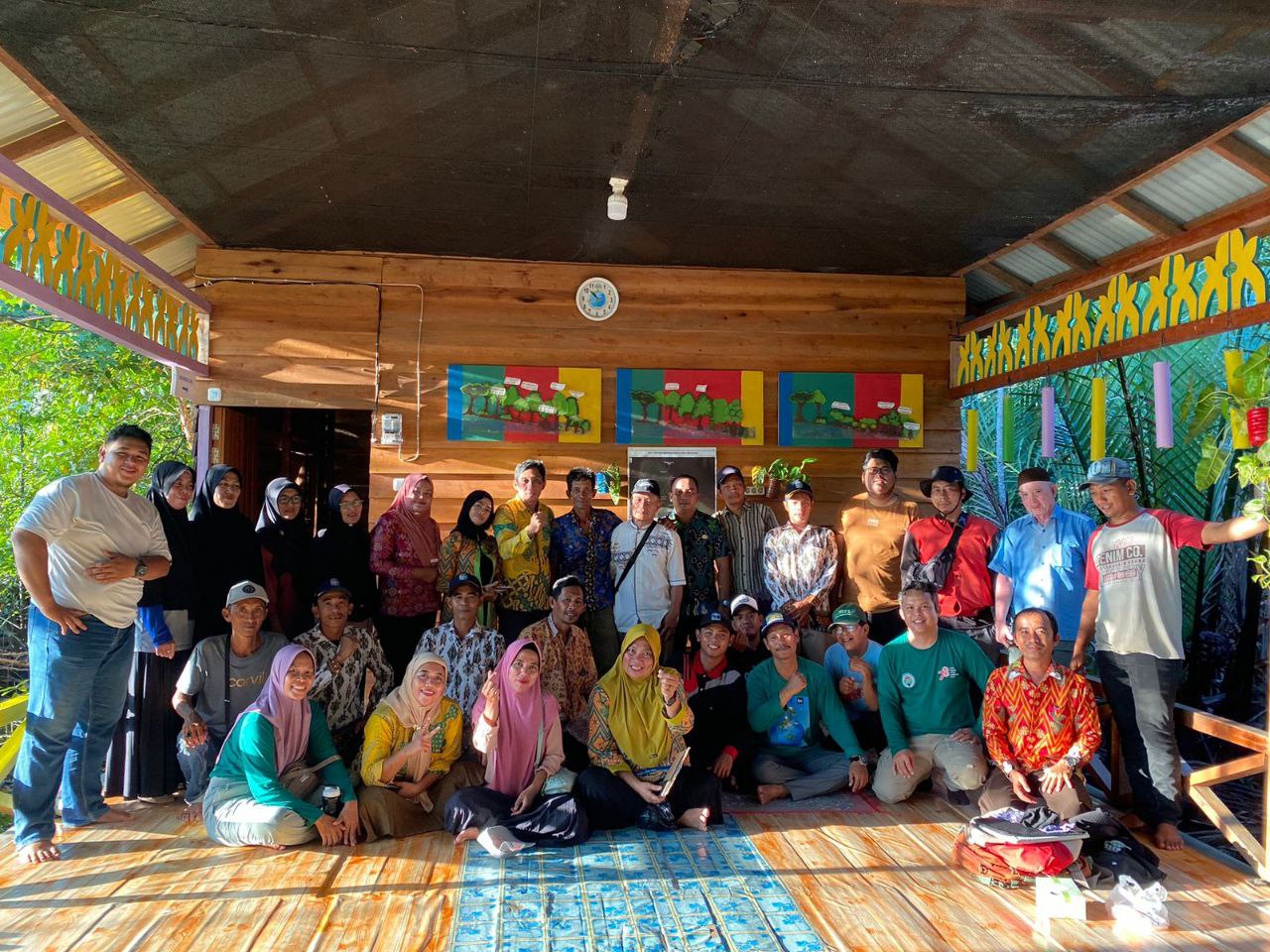 Post deliberation group photo – Blue Forests
The various efforts that have been made in Medan Mas are a true reflection of the local community’s commitment to adaptive and sustainable mangrove ecosystem management. These efforts are also supported by collaboration between the Blue Forest Foundation, Blue Action Fund, and Blue Ventures to demonstrate a deep awareness of the importance of maintaining harmony between humans and nature, especially mangroves, which are the primary foundation for the lives of rural communities.
The community not only utilizes mangroves as an economic resource but also protects them as a vital ecosystem that supports environmental sustainability. With a long-term-oriented approach, mangrove management is expected to provide benefits not only for the current generation but also as a valuable legacy for future generations, including children and grandchildren. This harmony between humans and mangroves is the basis for creating a better and more sustainable life while ensuring that the ecosystem remains sustainable as a life support system.